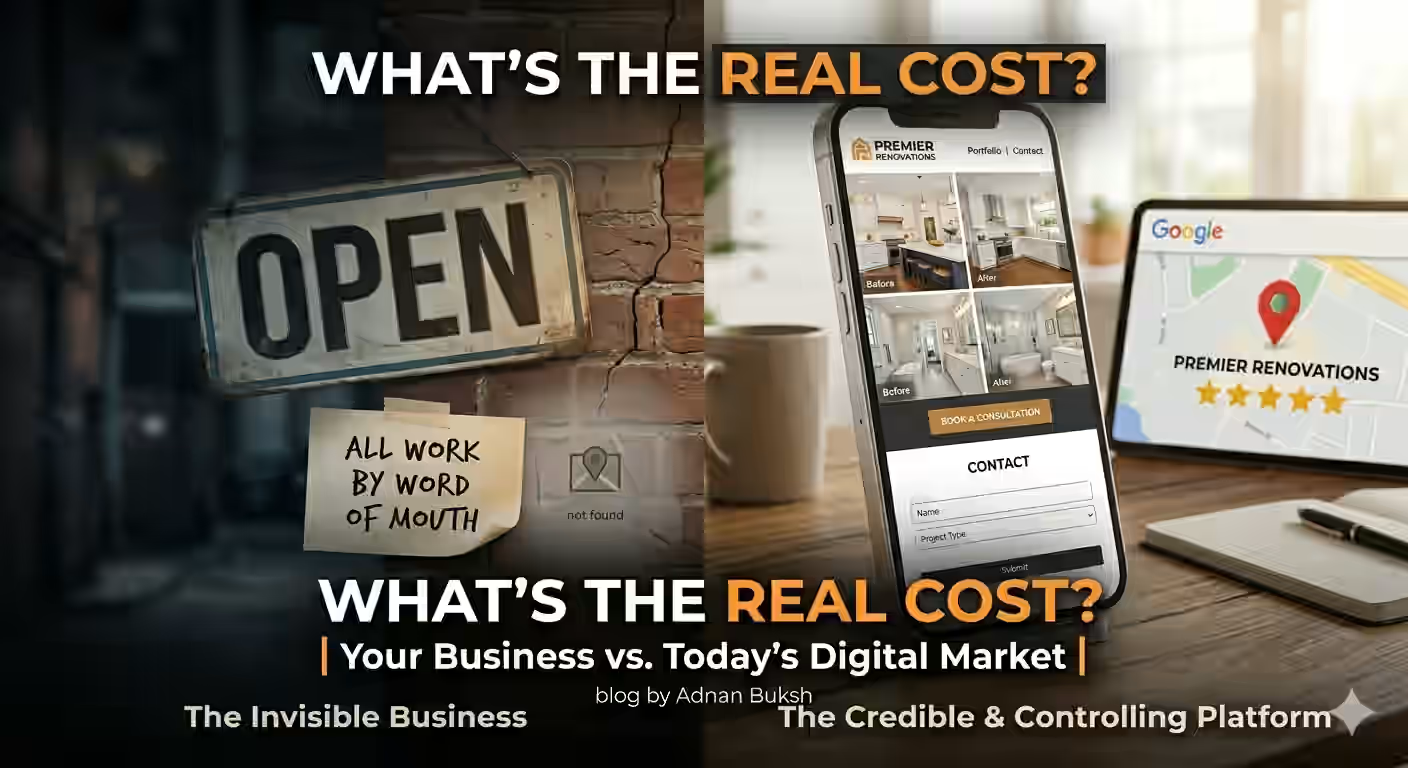
I had a conversation last month with a local business owner who’s been operating for twelve years. He runs a successful renovation contracting company. Good reviews on Google. Steady stream of referrals. When I asked about his website, he laughed.
“Don’t need one. All my work comes from word of mouth.”
I didn’t argue with him. But I thought about what that statement actually means in 2026, and I want to walk through the math—because the cost of not having a website isn’t abstract. It’s measurable. And it’s probably higher than you think.
Let’s start with how people find services today.
When someone needs a renovation contractor, they don’t ask their neighbour like they did in 2010. They pull out their phone. They type “renovation contractor near me” into Google. They look at the map results, read a few reviews, and visit the websites of the first three or four businesses that appear.
If you’re not in that local pack, you don’t exist to that person.
But here’s what business owners miss: the ones who do ask their neighbour still end up on Google. The neighbour says, “I used XYZ Construction, they were great.” Then the person searches for XYZ Construction to find their phone number, see their work, and verify they’re legitimate.
If XYZ Construction has no website, what shows up? A Google Business Profile with basic information, maybe some photos, and a few reviews. That’s it. No portfolio. No detailed service list. No way for the potential customer to evaluate whether this is actually the right fit.
The neighbour’s recommendation carries weight, but it’s not enough. People verify before they call.
I’ve built enough small business websites to watch this behaviour play out in analytics. Visitors land on the site, look at past projects, read about the company, check service areas, and then call. The site isn’t replacing word of mouth—it’s validating it.
Without that validation step, many potential customers simply move to the next name on the list who does have a site.
I fixed a hacked WordPress site last year for a client who’d been running without updates for eighteen months. The site had been defaced with gambling spam. His phone rang constantly with people asking why his site was showing casino ads.
That’s an extreme example. But it illustrates something important: your website is often the first impression people get of your business. If that impression is missing, outdated, or poorly executed, you’re communicating something about your standards.
A business without a website in 2026 isn’t invisible. It’s visible in a specific way. When someone searches for you and finds nothing, they don’t think “this business is so successful they don’t need a site.” They think “are they still in business?” or “are they professional enough to have their own space online?”
I’ve seen this pattern repeatedly. Businesses that rely solely on social media pages lose credibility with certain demographics—particularly older customers with money to spend, and younger customers who’ve learned that social media presence doesn’t equal business legitimacy.
A properly built WordPress site running on solid infrastructure signals stability. It says you’re established enough to invest in your own digital property. It says you’re not just renting space on someone else’s platform.
Here’s where the technical reality hits hard.
When your entire online presence lives on Facebook, Instagram, or Google, you’ve surrendered control over your business destiny. Let me explain what that actually means in practice.
Facebook changes its algorithm. Your posts that used to reach 500 people now reach 50. You can pay to boost them, but the cost per impression keeps rising. Your marketing budget now flows directly to Meta’s ad platform, and you have no alternative because your audience is there.
Instagram removes a feature. Maybe it’s the link in bio. Maybe it’s shopping tags. Maybe it’s something you built your entire sales process around. You adapt or you disappear.
Google updates its local algorithm. Your Business Profile drops from position three to position eleven. Your phone calls drop by 70% overnight. You didn’t change anything. Google did.
Your account gets suspended. It happens. Automated systems flag accounts incorrectly all the time. If you’re banned from Facebook or Google, your entire digital presence vanishes. No appeals process that works. No customer service number to call. Just a form email and a business that’s now invisible.
A self-hosted WordPress site eliminates these risks. Your content lives in a database you control. Your traffic comes from search engines that index your pages based on merit, not platform whims. Your email list belongs to you, not to Mailchimp’s servers. Your customer data stays in your systems.
This isn’t theoretical. I’ve worked with business owners who lost years of content and community when platforms shut down or changed direction. The custom WordPress development approach I take ensures that doesn’t happen—because the site’s architecture puts control in the business owner’s hands.
Let’s talk about what a website can do that a social media page cannot.
A few months ago, a client needed a way for customers to book consultations, pay deposits, and sign service agreements—all before the first phone call. We built it using WordPress, some custom fields, and a payment gateway integration. The entire flow took about three days to develop.
Try building that on Instagram.
Social platforms are designed for engagement, not transactions. You can point people toward a link in bio, but every click is a drop-off point. You can collect messages through DMs, but you can’t automate follow-ups. You can showcase products in posts, but you can’t manage inventory or process returns.
A website built by someone who understands conversion-focused development becomes a sales tool, not just a brochure. Forms capture leads and send them to your CRM. E-commerce functionality processes payments and manages stock. Booking systems let customers schedule appointments without email back-and-forth. Content guides visitors through your sales funnel at their own pace.
The business without a website handles all of this manually. Phone calls. Emails. Paper forms. Each interaction costs time. Each time cost adds up. Each manual process introduces errors and delays.
I’ve seen the numbers. A properly automated website doesn’t just generate leads—it reduces the cost of handling them.
Here’s a scenario I’ve watched play out multiple times.
A potential customer works nights. They finish their shift at 2 AM and start researching options for their home renovation project. They find your competitor’s website, browse through their portfolio, read their about page, and submit a contact form.
They never see your business because you don’t have a site.
Your competitor’s site captured that lead while they slept. By morning, the inquiry is in their CRM, and they’re following up. You never knew the opportunity existed.
This isn’t hypothetical. Website analytics show exactly when visitors arrive. For most small businesses, a significant percentage of traffic comes outside business hours. People research on their own time. If you’re not available during those hours, you’re invisible.
A website works 24 hours a day, 365 days a year. It doesn’t take weekends off. It doesn’t close for holidays. It answers questions, showcases work, and captures leads continuously.
The cost of not having that isn’t abstract—it’s every lead that went to someone else while you were unavailable.
This might seem counterintuitive, but hear me out.
When you don’t have a website, you’re forced to use alternatives that come with their own security risks. I’ve cleaned up infections on Facebook business pages from malicious browser extensions. I’ve seen Google Business Profiles hijacked by competitors who claimed ownership. I’ve watched business owners lose access to years of content because they forgot passwords and recovery options failed.
A properly maintained WordPress site with regular updates, a firewall, and good backup practices is actually more secure than relying on third-party platforms—because you control the entire stack. You choose the hosting. You implement the security measures. You maintain the backups.
Through my wordpress maintenance services, I ensure sites stay updated and protected. But even without professional maintenance, a basic WordPress installation with proper security plugins and regular updates is more reliable than hoping a social media platform never locks you out.
Here’s what I see when I audit local search results.
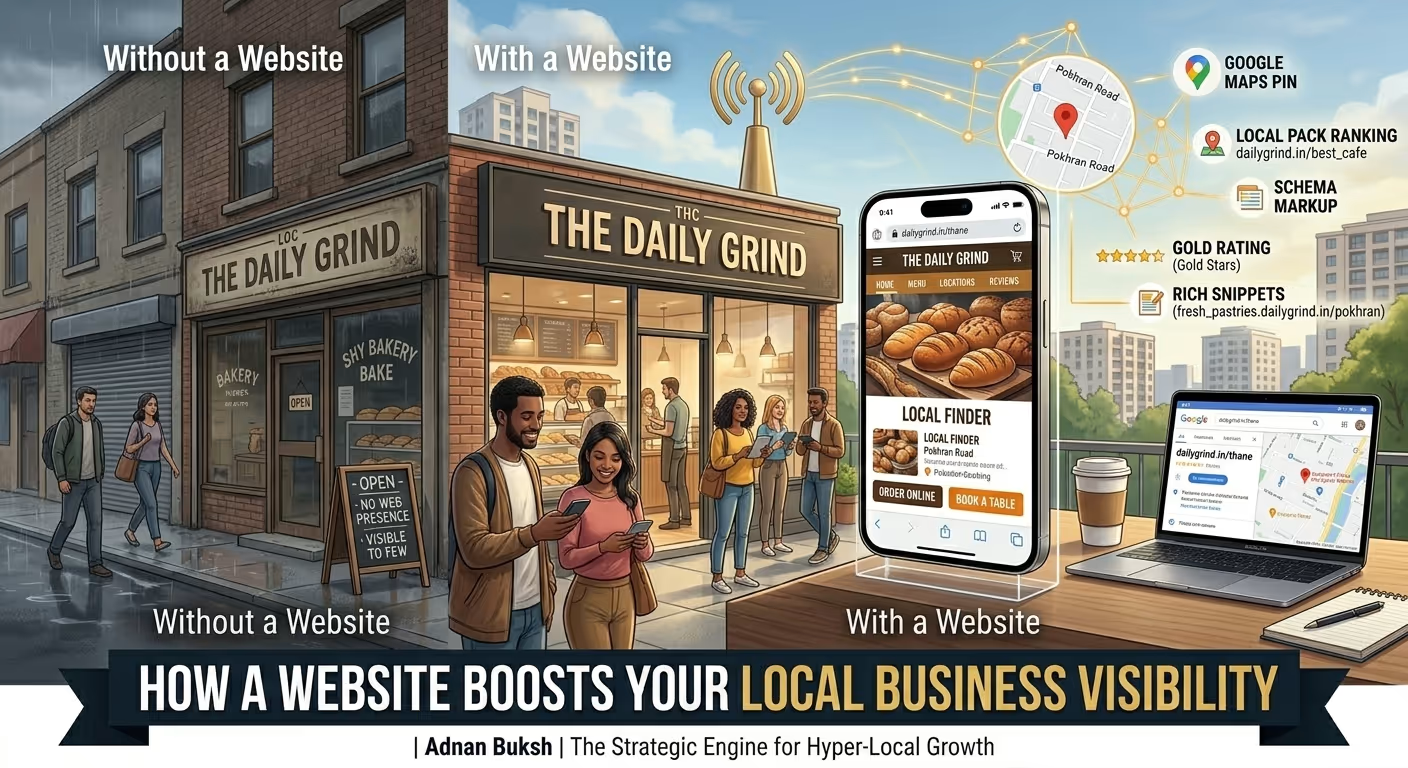
Businesses with websites consistently outrank businesses with only Google Business Profiles—even for branded searches. Google’s algorithm favors sites with depth, structure, and regular updates. A Business Profile alone provides limited information. A website with service pages, blog content, portfolio items, and location pages gives Google context about what you do and where you do it.
The business without a website isn’t competing in search. They’re hoping customers find them through maps or direct searches. But even direct searches—someone typing your business name into Google—return limited results without a site. Maybe a profile. Maybe some reviews. Maybe nothing.
I approach this as a freelance seo expert who understands that search visibility starts with having something to index. You cannot rank for keywords you care about if you don’t have pages dedicated to them. You cannot capture traffic from “renovation contractor near me” if Google has no content to evaluate.
The site isn’t just for customers who already know you. It’s for everyone searching for what you offer, who hasn’t found you yet.
Let me end with a perspective shift.
A website built properly isn’t an expense. It’s an asset.
Every piece of content you add—service pages, blog posts, portfolio items, case studies—accumulates value over time. Old content continues to attract traffic. Backlinks build authority. Search rankings compound. Email lists grow. Customer data accumulates.
Social media posts disappear into feeds within hours. Google Business Profile updates get buried under new reviews. Third-party platforms own the relationships.
When you hire a wordpress developer to build something custom, you’re not paying for code. You’re investing in an asset that generates returns for years. It appreciates with attention. It works while you sleep. It belongs to you.
The business without a website never builds that asset. They rent attention from platforms that increase prices and decrease reach. They hope algorithms favour them. They cross their fingers that accounts never get suspended.
That’s the real cost. Not the missing leads today. The missing asset tomorrow.
The renovation contractor I mentioned at the start? He’s successful. He does fine with referrals. But he’ll never know how many people searched for his services and went elsewhere because they couldn’t verify his work. He’ll never know how many potential customers chose his competitor because their site showcased similar projects with before-and-after photos. He’ll never know what he’s missing.
That’s the nature of opportunity cost. You don’t feel it. You just don’t grow as fast as you could.
In today’s market, not having a website means you’re invisible to everyone who doesn’t already know you. It means you’re competing with one hand tied behind your back. It means you’re building a business on rented land while your competitors buy property.
The question isn’t whether you can survive without a website. Plenty of businesses do.
The question is what you’re giving up by not having one.
Need to understand what a proper website would cost for your business? I work directly with business owners to build WordPress sites designed for results—not just appearances. Let’s talk about your situation and whether a site makes sense for you.